
VanScoutFree on Google PlayGet
Free camping · South Australia

Free camping in South Australia

Where free and low-cost camping is legal in SA, the rules that change by land type, and 10 camps from the outback to the Limestone Coast, with what each one costs.

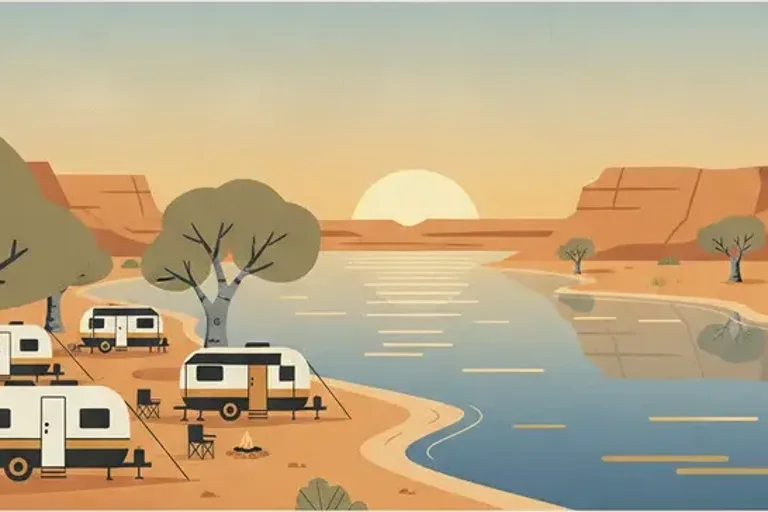
Illustration of an Australian free camp beside a river at golden hour
The short answer

There is no general right to free camp anywhere in South Australia. Free or low-cost camping is legal for up to 21 days on unallotted Crown land, at designated council campgrounds, and in forest and park campgrounds where a fee or booking applies. Golden rule: camp only where it is signed or designated, and leave no trace.

Know before you go

The rules, at a glance

South Australia leans to low-cost park and council camps. Fees are small but bookings and permits are common, so always check the managing authority before you go.
WhereMax stayPermit requiredWhere it's prohibitedFine rangeSource
National & conservation parksVaries by park; book online up to a year aheadYes: online booking and camping fee; camp only in your designated siteAnywhere outside designated campgrounds; roadside verges in parksExpiation fees; prosecution under the NPW Act 1972Parks SA (DEW)
Crown land (unallotted)Up to 21 daysNo permit needed; vehicles must stay on established tracksLeased, licensed or dedicated Crown land; no firewood collectionExpiation about $315; penalties to $20,000 (Crown Land Mgmt Act 2009)Dept for Environment & Water
Forest reservesCamping season 1 Apr to 30 Nov onlyYes: book and pay online for designated campgroundsNo dispersed camping; forests close on Total Fire Ban daysPenalties under the Forestry RegulationsForestrySA
Council & foreshore reservesFrom 24 hours to 30 days, set by each councilVaries: some free or self-contained, some permit or small feeStreets and roadsides in most towns; all council foreshores on Yorke PeninsulaBy-law expiation fines vary (e.g. Yorke: $312.50 for camping without a permit)Local councils (LG Act 1999)
Outback / desert parksUp to 21 nights per parkYes: 12-month Desert Parks Pass, A$211 (mandatory for the Simpson Desert)Off-track driving on dunes; camping at signed no-camping sitesEntry or camping without a valid pass is an offence (NPW Act 1972)Parks SA, Desert Parks Pass
Where to go

10 camps across SA, with what each costs

A mix of genuinely free bush camps, donation-based reserves and low-cost park and council sites, chosen for caravan access and spread across the state. Each note is honest about cost, access and facilities, so always confirm the current rules with the land manager before you travel.

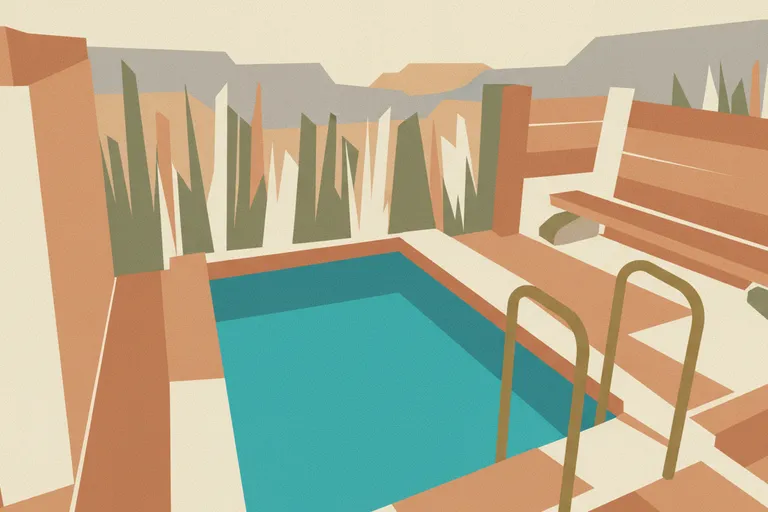
A famous private eco-camp on the gravel Oodnadatta Track, deep in the outback. Caravans drive in to unpowered, shady sites with fire pits, drop toilets, wood-fired hot showers and rainwater, plus the real drawcard: a natural artesian spa to soak off the dust. Fees are A$18 an adult and A$8 a child a night, there are no generators, and no fires from the end of October to April. Strictly cool-season country, because the desert turns dangerous in summer heat.

A$18 an adultHot showersDog-friendlyDrinking waterToilets
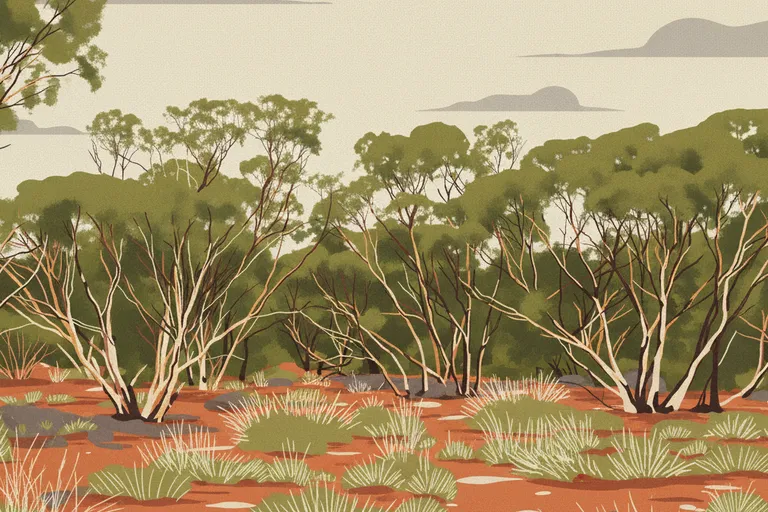
Babbler is one of three bush camps at BirdLife Australia's Gluepot Reserve in the Riverland mallee, a world-class birdwatching sanctuary. The closest camp to the visitor centre, it has 18 shaded sites that take caravans when the tracks are dry, plus drop toilets and walking trails. Camping is A$20 a vehicle a night, only gas fires are allowed, and the tracks close after heavy rain. No power, no water and no pets, so bring everything and leave with your rubbish.

A$20 a vehicleToiletsGas fires onlyBirdwatching
Illustration of Border Cliffs03

Border Cliffs

Riverland

A quiet five-site bush camp on the River Murray in Chowilla Game Reserve, reached by 2WD or 4WD. The riverfront sites are for tents, and caravans and campervans use the car park area among the river red gums. The birdlife and mirror-still reflections make up for it. A$15.40 a night, booked and paid through Parks SA, and no campfires in the Fire Danger Season.

A$15.40 a nightDog-friendlyToiletsBook first
04

Frank Potts Reserve

Langhorne Creek

Alexandrina Council’s only approved camping site, at Langhorne Creek in the wine country north of Lake Alexandrina, for caravans and self-contained motorhomes. Stays are up to 72 hours, there are no advance bookings, and a A$5 donation is suggested. No campfires. A handy, quiet stop between Adelaide and the Coorong.

A$5 donation72 hoursNo bookingsNo campfiresCaravans OK
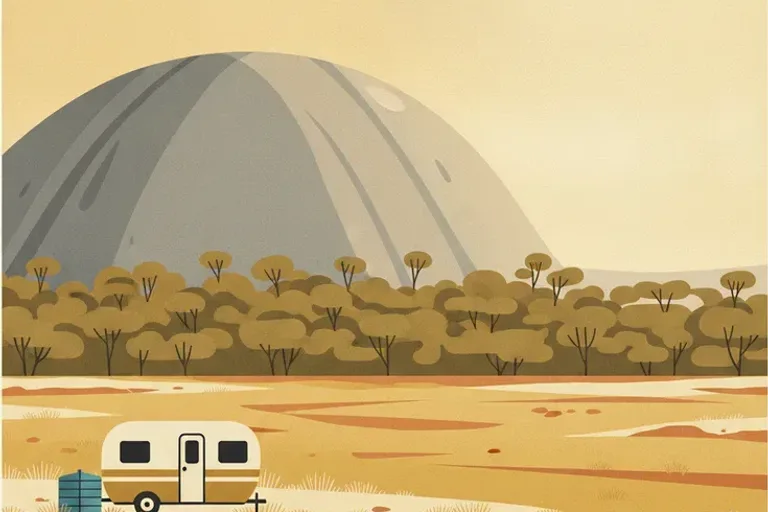
Illustration of Carappee Hill05

Carappee Hill

Eyre Peninsula

A free, basic bush camp at the foot of the Eyre Peninsula's highest point, in Carappee Hill Conservation Park near Darke Peak. A gravel road (2WD in the dry) leads to a handful of sites with a toilet, fireplaces and a picnic table under the granite. Climb the hill for big wheatbelt views. No pets and no water, so come prepared.

CampfiresToiletsWalking track
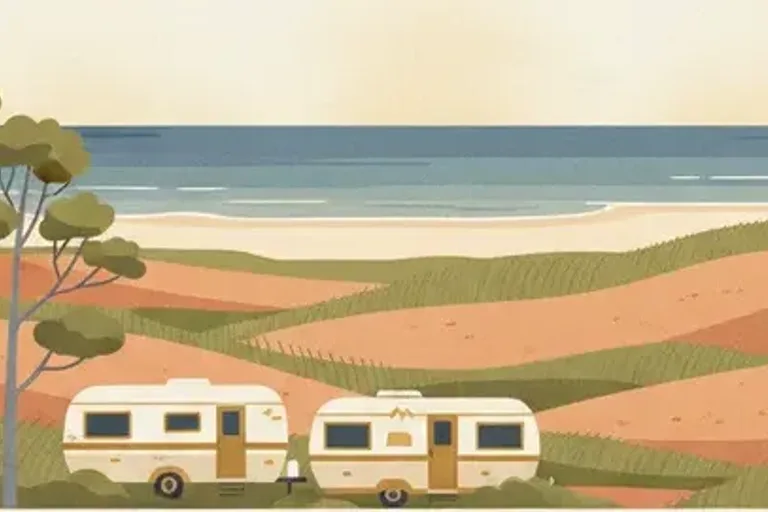
Illustration of The Bamboos06

The Bamboos

Yorke Peninsula

A small, unpowered Yorke Peninsula Council bush camp tucked at the base of coastal dunes near Balgowan. A narrow coastal track suits smaller caravans, campers and tents; there is a toilet and fire pits, and dogs are welcome under control; the nearest dump point is at Maitland Oval. Buy a camping permit online first, from A$20 a night. Quiet, sheltered, and steps from the beach.

From A$20 a nightDog-friendlyToiletsPermit online
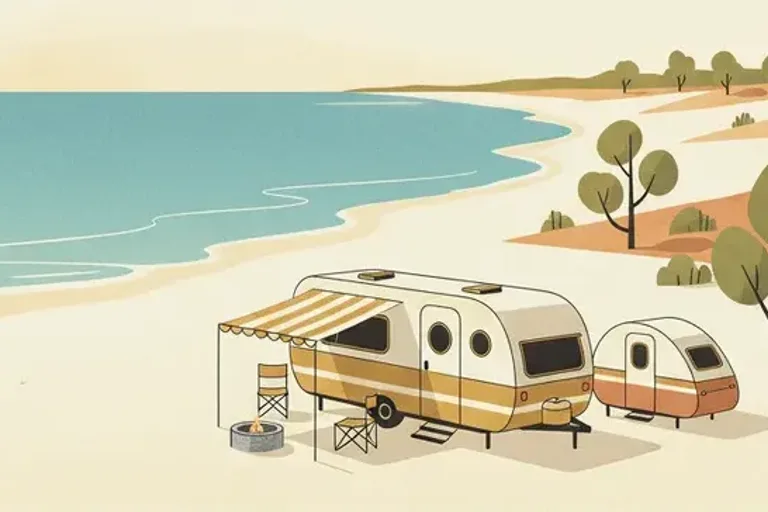
Illustration of Goldsmiths Beach07

Goldsmiths Beach

Yorke Peninsula

A Yorke Peninsula Council beach camp near Edithburgh with well-defined, unallocated sites big enough for large caravans, reached on about 8 km of unsealed road. There is a toilet, and otherwise it is self-sufficient beach camping by paid online permit, from A$20 a night: fishing off the sand, dogs on leads, and the Edithburgh tidal pool a short drive away.

From A$20 a nightToiletsFishingDog-friendly
Illustration of Carpenter Rocks08

Carpenter Rocks

Limestone Coast

A free camp for self-contained vehicles behind the hall at Carpenter Rocks, on the wild Limestone Coast, listed by Southern Limestone Coast Council (formerly the District Council of Grant). There are toilets, a picnic table and a dump point. No camping in the car park, and the council asks for a donation to the Carpenter Rocks Progress Association, paid at the shop.

Free (donation)Self-contained onlyToiletsDump point
Illustration of Little Dip (Long Gully)09

A large open, unallocated campground (up to 20 vehicles) in Little Dip Conservation Park near Robe, set among coastal heath, dune lakes and empty surf beaches. A 2WD road suits small-to-medium caravans; there is a pit toilet and picnic table but no power or water. Book and pay through Parks SA, from A$19.80 a night. No pets in the conservation park.

From A$19.80 a nightToiletsBook first
Illustration of Wrights Bay10

Wrights Bay

Limestone Coast

A privately run beachfront camp 17 km north of Robe, with large open unpowered sites that take caravans, RVs and big rigs right behind the dunes. Toilets, coin-operated hot showers, tank water and dump points cover the basics, and the fishing and long beach walks are the draw. A$15 an adult and A$10 a child a night, fires only from April to October in a contained pit or drum, and dogs are welcome on leads.

A$15 an adultShowersDog-friendlyTank waterDump point
Timing

When to go: chasing weather across SA

South Australia rewards travellers who follow the weather. The outback and Flinders Ranges are cool-season country: April to September brings mild days and cold, clear nights, and it is the only sensible window for the desert parks. The Simpson, the Oodnadatta Track and the Lake Eyre region see extreme summer heat that makes remote camping dangerous. In the warmer months, flip your plans to the coast, where the Yorke, Eyre and Fleurieu peninsulas, the Limestone Coast and Kangaroo Island offer sea breezes, long daylight and the pick of the foreshore and beach camps.

Fire safety governs everything from spring to autumn. SA's Fire Danger Season is set district by district through the CFS: for 2026–27 it runs from 15 October 2026 to 15 April 2027 in the Flinders, the two pastoral districts, the West Coast and Eastern Eyre, and from 15 November on Lower Eyre. On a declared Total Fire Ban day no campfire is allowed anywhere, parks ban gas stoves too, and ForestrySA forests close entirely. Wood fires are prohibited on ForestrySA land from 1 November to 30 April. Always check the CFS Fire Danger Rating and your district's ban status before you light anything, and carry a gas cooker as your fallback.

FAQ

Common questions

Can I camp for free anywhere in South Australia?

No. There is no general right to camp wherever you like. Free or low-cost camping is legal on unallotted Crown land for up to 21 days, at designated council campgrounds, and in some designated park and forest campgrounds. Everywhere else (roadsides, streets, signed reserves and beaches) needs a booking or permit, or is prohibited outright.

Do I have to book and pay to camp in SA national parks?

Yes. Almost all camping in South Australia's national and conservation parks requires an online booking and camping fee through Parks SA, and you must camp only in the designated site you have booked. You can book up to 12 months ahead. Camping outside designated areas is an offence under the National Parks and Wildlife Act 1972.

What is the Desert Parks Pass and when do I need one?

It is a 12-month vehicle-entry-and-camping pass for SA's outback parks, including Witjira, Kati Thanda (Lake Eyre), Innamincka and the Munga-Thirri Simpson Desert. It costs A$211, allows up to 21 nights per park and is mandatory to enter the Simpson Desert or travel east of Dalhousie Springs. The Simpson closes every year from 1 December to 15 March. Buy it through Parks SA before you head into the remote outback.

How long can I stay when camping on Crown land?

Camping on unallotted Crown land is generally allowed for up to 21 days without a permit, under the Crown Land Management Act 2009. Vehicles must stay on established tracks, you cannot collect firewood, and it does not apply to leased, licensed or dedicated Crown land. Council campgrounds set their own limits, from a day or two up to 30 days on a Yorke Peninsula permit.

Can I have a campfire while free camping in SA?

It depends on the land manager. During the Fire Danger Season the state allows a campfire only in a 30 cm deep trench no bigger than a square metre, with 4 metres cleared around and above it and someone watching it. Many parks, all ForestrySA forests and Yorke Peninsula's council campgrounds ban wood fires for the whole season. On a Total Fire Ban day no campfire is allowed anywhere, and parks ban gas stoves too. Check the CFS website for your district's dates and the daily rating, and carry a gas cooker.

Find free camps for your SA trip

VanScout puts free camps and caravan parks along your route in one search, with live availability wherever parks support it and a filter for the ones with a dump point. Start free and have the next trip sorted before the good sites go. Live availability is Premium, free for your first 7 days.

Start planning free

Last updated 6 November 2026